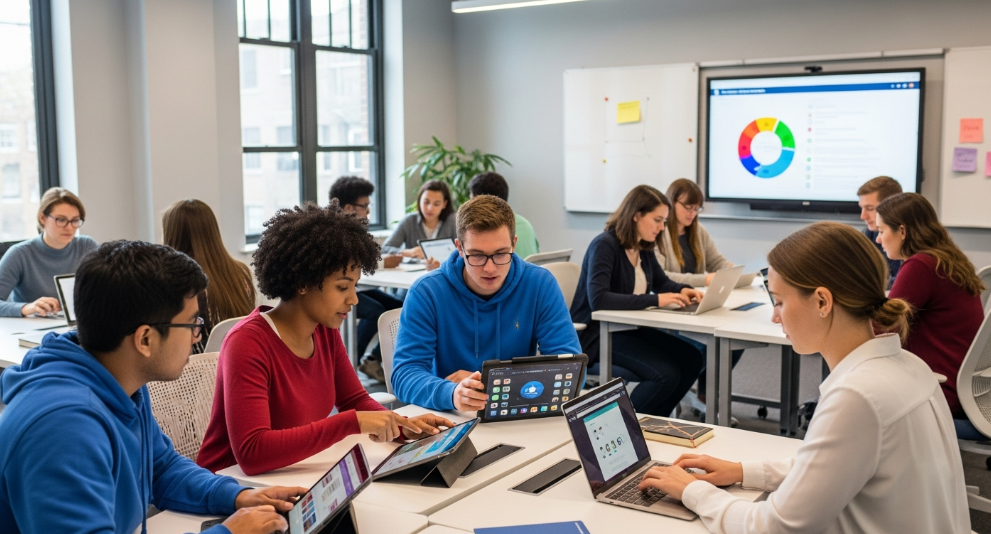
Education is changing, fast. Digital tools mean online learning has really taken off, giving students super flexible, easy-to-reach, and clever ways to learn. No more being stuck in classrooms with strict timetables. That’s a good thing. The real question is: how exactly do these digital tools remold how we study and grasp the world around us?
Accessibility and Flexibility
For many people, the most appealing aspect of online education is its accessibility. Students no longer have to commute long distances for class. They can join from anywhere, like their couch, their office, or even while traveling. This kind of flexibility lets learners juggle studies with other stuff, you know, family or work. And it really works. Statistics from 2026 show that over 70% of higher education students in the U.S. have taken at least one course online. With so many platforms out there, all catering to different learning styles, getting knowledge has never been simpler.
But this isn’t just about convenience. It also makes education more democratic, knocking down barriers for folks in remote areas or those with disabilities. Online resources can be custom-fit to specific needs, maybe recorded lectures for auditory learners or interactive simulations for people who learn by doing. I’ve seen firsthand how much this helps. It’s a huge move toward truly inclusive education. Big change.
Clever Learning Tools
There are several different types of digital learning tools. We’re talking about educational videos, interactive quizzes, and even virtual reality experiences. These tools significantly improve the learning experience. Consider the rise of online practice test platforms. They allow students to actively engage with the information, developing skills in real time rather than simply sitting there and taking it all in.
Think about it: traditional learning often leans on rote memorization. Boring, right? And not very effective. Online education shifts things toward active learning, pushing students to actually use what they’ve learned. This builds a deeper understanding, obviously, but it also helps create critical thinking skills, which are super valuable for today’s job market. Employers want people who can think on their feet and roll with new challenges. Digital learning environments help grow those abilities. I think that’s a key benefit most people overlook.
Community and Collaboration
You might assume online education means going it alone, but it actually builds community and teamwork in ways you wouldn’t expect. Students from all over the world can connect, swap ideas, and work together on projects using various digital platforms. This back-and-forth makes learning richer, giving everyone perspectives from different cultures and backgrounds. Pretty cool, when you think about it.
Online forums, discussion boards, and group projects help create a sense of belonging, something often missing in old-school settings. Whether it’s through peer reviews or group study sessions, students are learning to collaborate. That’s a really important skill in any job. It’s not just about what you achieve alone; it’s about building networks and having real conversations. I’ve found these connections can last well beyond the course itself.
The Future of Study
Education and technology are inextricably interwoven as we move forward. As AI and machine learning advance, we will see even more tailored learning experiences. Consider a system that adapts to your pace, providing you with resources and issues tailored specifically to your needs. It’s almost here.
But we’ve got to balance the good things about tech with the need for human interaction. The best learning setups will probably mix online and traditional methods, a hybrid model that works for lots of different needs. Educators will need to accept this change, constantly updating their teaching to bring in new tools and methods.
The whole world of education is shifting, and those who adapt will be the ones leading. Online education isn’t just some passing fad; it’s a deep change in how we share and absorb knowledge. So, as students, teachers, and lifelong learners, we should explore, adapt, and really make the most of this new digital world. That’s the only way.